Context and Objectives in China
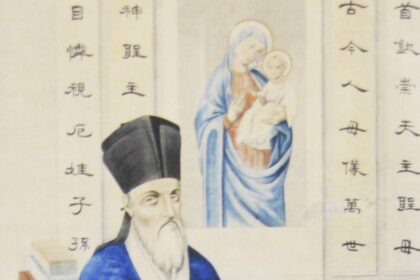
Originating from Sicily, Intorcetta became a member of the Jesuit order, renowned for its robust heritage in education and missionary endeavors. Similar to Matteo Ricci, Intorcetta embarked on a missionary journey to China, arriving in 1659. He engaged deeply with Chinese culture and language, seeking to foster understanding and trust within the educated elite of China. His objective was to disseminate Christianity while also enhancing European understanding of Chinese culture and thought.
Translation of Confucian Texts
Intorcetta is renowned for translating Confucian literature into Latin, so rendering them accessible to European scholars for the first time. His translations comprised:
Confucius Sinarum Philosophus (Confucius, the Philosopher of the Chinese) — Intorcetta collaborated with fellow Jesuits, including Philippe Couplet and Christian Herdtrich, to create this significant work in 1687. It comprised Latin translations of Confucius’s Analects, Great Learning, and Doctrine of the Mean. This publication portrayed Confucius as a philosopher rather than a religious person, highlighting the ethical and intellectual dimensions of Confucian thought.
Philosophical Commentary – Besides translating Confucian works, Intorcetta offered commentary to assist European readers in comprehending Confucianism within its cultural and philosophical framework. He emphasized Confucian doctrines of ethics, government, and personal integrity, accentuating qualities such as filial piety, honesty, and benevolence.
Intorcetta’s translations were revolutionary, presenting Confucianism to Europe not as a remote “exotic” faith but as a rational, ethical framework that mirrored elements of Western thought. By emphasizing Confucian ethics, he rendered the philosophy accessible to European researchers who recognized its potential significance for their own civilization.
Impact on European Intellectual Discourse
Intorcetta’s translations and commentary significantly influenced European understandings of Chinese culture and philosophy. His ideas influenced Enlightenment philosophers such as Voltaire, Leibniz, and Montesquieu, who were captivated by Confucianism’s focus on rational administration, ethical integrity, and social harmony. These intellectuals drew inspiration from Confucian principles, perceiving them as a counterbalance to the Christian dogmatism prevalent in Europe.
Leibniz particularly esteemed Confucianism’s emphasis on ethics and pragmatic philosophy. He communicated with Jesuit missionaries in China and incorporated Confucian principles into his own work, promoting a synthesis of Western and Eastern philosophies. The cross-cultural communication facilitated by Intorcetta and his colleagues enabled European philosophers to envision a more secular and ethical society.
Heritage and Importance
Intorcetta’s oeuvre established a profound legacy by forging intellectual connections between the East and the West. By portraying Confucius as a philosopher comparable to Plato or Aristotle, he fostered a respectful appreciation of Chinese civilization and its contributions to global knowledge. His translations fostered an interest in Chinese philosophy that expanded throughout the Enlightenment and continued beyond.
Furthermore, Intorcetta’s work reflects the Jesuit methodology for intercultural engagement. Instead of trying to impose European concepts on Chinese society, Intorcetta aimed to comprehend and translate Chinese thought on its own terms. His focus on the ethical aspects of Confucian philosophy resonated with European intellectuals and facilitated a more sophisticated comprehension of Chinese culture.
Intorcetta’s translations constituted some of the earliest significant contributions that familiarized a European audience with Confucianism, signifying a crucial juncture in the annals of cross-cultural studies. His legacy persists as a seminal illustration of how knowledge and mutual respect can surpass geographical and cultural boundaries, facilitating an intellectual interaction that enhances both East and West.
https://drive.google.com/file/d/1RvqPi_TkpN23hWIzCJwzHx8_t10InieG/view?usp=drive_link
<iframe src="https://drive.google.com/uc?export=preview&id=1RvqPi_TkpN23hWIzCJwzHx8_t10InieG" width="640" height="480" allow="autoplay"></iframe>