History and Goals in China
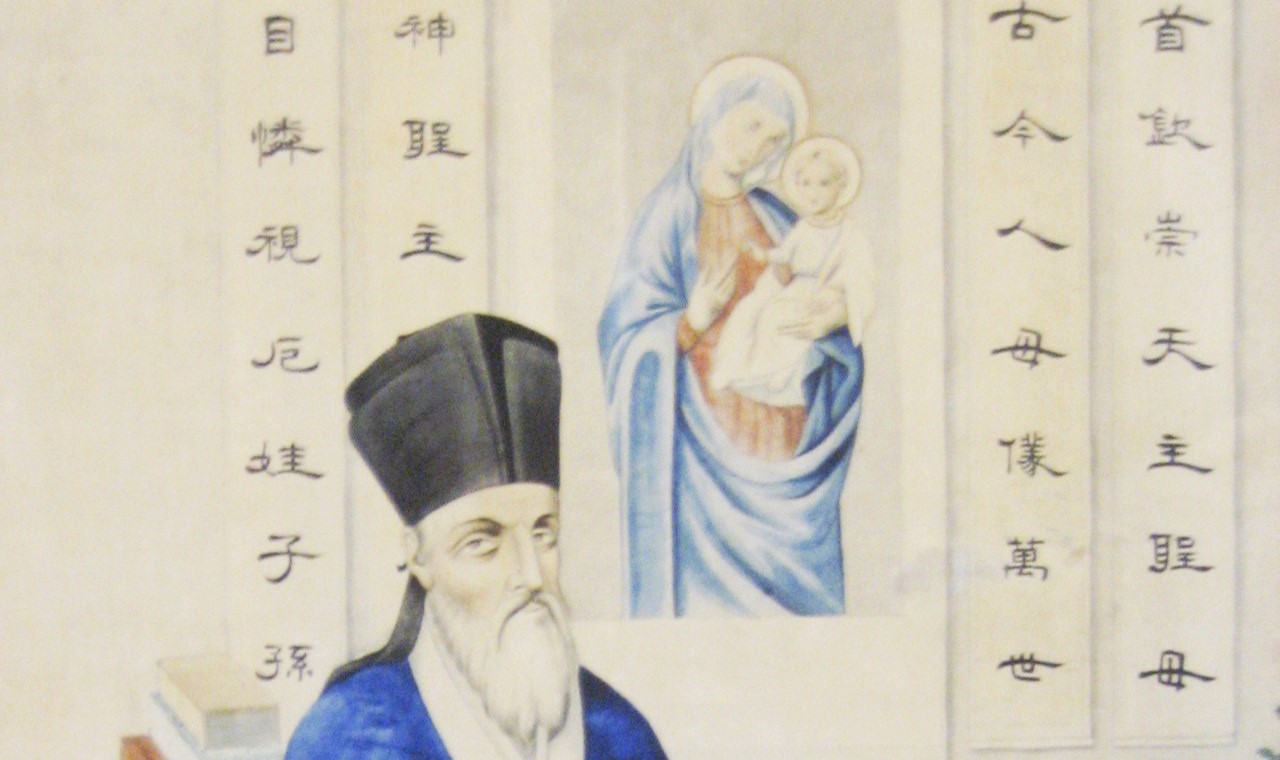
Born in Italy, Matteo Ricci became a member of the Jesuit order, which placed a strong emphasis on research, education, and missionary service. With the goal of fostering religious and cultural relations via knowledge sharing rather than coerced conversion, he was dispatched to China in 1582 as a member of the Jesuit mission. Ricci used a novel method by learning Chinese, assimilating Chinese culture, and presenting Christianity in ways that were consistent with Confucian principles rather than imposing Western ideals.
Additions to Knowledge and Science
Building confidence with Chinese academics and officials was made possible by Ricci’s proficiency in mathematics, astronomy, and cartography. Among his most significant achievements are:
- World Maps: Ricci produced some of the first Chinese world maps in the Western style, exposing Chinese academics to a fresh viewpoint on the world. His depictions of China alongside other continents, such as the well-known Kunyu Wanguo Quantu (Map of the Ten Thousand Countries of the Earth), captivated and informed Chinese leaders about the global community.
- Scientific Knowledge Ricci was a respected person in the Chinese court because of his expertise in engineering, geometry, and astronomy. His talks about European innovations in navigation and timekeeping captivated Chinese thinkers and strengthened the bonds between the two scientific traditions. He also created the mechanical clock, which paved the way for intellectual interchange and came to represent European inventiveness.
- Texts and Translations Ricci and his fellow Jesuits translated portions of Western books (especially scientific texts) into Chinese and significant Chinese texts into Latin. His cooperation on the Chinese translation of Euclid’s Elements, which presented mathematical ideas fundamental to European science, was one of his noteworthy accomplishments.
Interaction of Culture and Religion
Though he was not permitted to meet the emperor, Ricci became the first Westerner to be accepted into the Forbidden City and was able to blend into Chinese intellectual circles thanks to his respectful approach to Chinese culture. He was able to explain Christianity in a way that highlighted shared ethical norms because of his thorough understanding of Confucianism. Instead of criticizing conventional wisdom, he looked for similarities between Confucian and Christian ideas, which won him favor and helped the educated class accept Christianity.
History and Impact
Matteo Ricci left behind a significant legacy by helping Europe comprehend Chinese culture in addition to bringing European knowledge to China. He received an imperial funeral in Beijing upon his passing, which is an uncommon distinction for a foreigner. His publications on China were among the first to give Europe a thorough understanding of Chinese philosophy, society, and customs; this led to a fascination with Chinese civilization and an impact on European thought.
Ricci’s strategy established a standard for respectful, communicative, and understanding cross-cultural exchange. His work serves as an example of how knowledge, science, and cultural sensitivity can unite wildly disparate nations and create spiritual and intellectual relationships that last for generations. His efforts are a model of diplomacy and respect for cultural differences, and they have had a long-lasting effect on Sino-European ties.