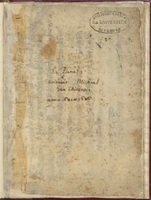
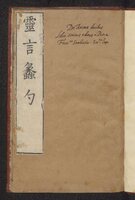
1. Dedicace (f. 1r)
2. Michael Psellos, Aenigmata (περὶ ἐνιγμάτων, f. 2r – 3v; Boissonade, Anecdota graeca, 1829-1833, vol. 3, 429-436)
3. Excerpts of Basileios Megalometos, Αἰνίγματα (ἐνταυθα βασιλείου τοῦ μεγαλομητου, f. 3v-5r; Boissonade, Anecdota graeca, 1829-1833, vol. 3, 437-452)
4. Hieromonk Metrophanos, Letter to Nikolaos Choniates (ἐπίγραμμα μ(ετ?)ροφανου ἱερομοναχοῦ πρὸς τὸν σοφωτατον καὶ λογιωτατον πρωτονοτάριον Μονεμβασιας κυρ Νικολάον τὸν Χωνιάτην, f. 5r-v)
5. Marcus Iunius Brutus, Letters (ἐπιστολαὶ· Βροῦτος περγαμηνοῖς, f. 5v-7r)
6. Oracula Leonis (λέοντος τοῦ σοφωτάτου βασιλέως χρισμοί, f. 10r-18v)
7. Dispute between Panagiotis and the azymites (ἐπιστολή γραφεῖσα παρὰ τοῦ πάπα πρὸς τὸν βασιλέα· διαλέξις τοῦ Παναγιώτου, μετὰ Λατίνων, ἔχων οὕτως, f. 19r-36v)
8. Euthymios Zigabenos, excerpts from the Panoplia dogmatica ad Alexium Comnenum (περὶ τοῦ Μωάμεθ ἀνθ(ολογία?) μ(έ?) τ(οὺς?), f. 37r-37v; PG 130, col. 1337, 1340)
9. Unidentified botanical text (οἱ ἀνθέμις ἡ βοτάνη καὶ ἀμαράκον κάλουσιν αὐτὴν, f. 37v-38r)
10. Grammar lessons (f. 39r-39v)
11. Gennadios Scholarios, Expositio brevis fidei christianae (Γενναδίου πατριάρχου Κωνσταντινουπόλεως μετὰ τὴν τῆς πατριαρχίας παραίτησιν περὶ τῆς ὁδοῦ τῆς σωτηρίας τῶν ἀνθρώπων, δόθεν μετὰ τὰς διαλέξεις ἔγγραφόν τε καὶ σύντομον ἀπαιτήσασι περὶ τῆς ἡμετέρας πίστεως καὶ τῶν κεφαλαίων αὐτων περὶ ὦν γεγόνεν ἡ διάλεξις· σὺν τινος συγγράμματος πλατύτερου γεγονότος αὐτοῦ ἐπὶ τῇ ὁμοίᾳ ζητήσι πρό τῆς ἁλώσεως, ff. 39v-44r)
12. Questions (ρώτησις να, ff. 44v-45r)
13. Treatise against the Armenians (Κατὰ τῶν Ἀρμενίων παρατηρήματα, ff. 45r-51r)
14. Mathusalem Monachos, Questions and answers about the Latins († περὶ τῶν Φραγκῶν πεῖσιν καὶ ἀπόκριαν Μαθουσάλημ μοναχοῦ, ff. 52r-58r)
15. Questions and answers about the Bible (ff. 60r-80v)
16. Poems on religious and liturgical subjects, prayers and alphabets (ff. 80v-83r)
17. List of the seven ecumenical councils with chronological computation (ff. 83v-84r)
18. On phlebotomy (Περὶ φλεβοτομίας, f. 84v-86r)
19. About the signs of the Antichrist (Τὰ σημεία τοῦ Ἀντιχρίστου, ff. 86r-86v)
20. Scriptural passages (Psalms 103) and interpretations (ff. 86v-97v)
21. Names of the months (Attic, Hebrew, Egyptian, Macedonian, Agarenian) and numeration of the days of the months according to the Athenians (ff. 98r-99r)
22. Cyril Loukaris, Canonic epistle (Κύριλλος ἔλεω θεοῦ πάπας καὶ πατριάρχης τῆς μεγάλης πόλεως Ἀλεξανδρείας καὶ κρίτης τῆς οικουμένης, ff. 101r-107v)
23. Parodic hymns (iambic verses: Δεῦτε προσκυνήσωμεν τῷ βασίλει/Δ᾽ εὐτερίτε κάμψωμεν, κριῶ ἀμῶν πιπί, ff. 109r-116v)
24. Profession of faith (Τὸ πιστεύω εἰς ἕνα Θεὸν Πατέρα παντοκράτορα, ff. 116v-117v)
25. Exercise /schedos? (φίλος πεφηκώς τῶν φιλούντων τὸν φίλον, f. 117v)
26. Euthymius the Monk, Dialogue of the monk Euthymius with a Saracen (Διαλέξις ἀγαρηνοῦ μετὰ τινος μοναχοῦ Ευθυμίου περὶ τῆς πίστεως, ff. 119r-134v)
27. John Hamartolos, Discussion that I, John Hamartolos, had some years ago with the head of the Koudougheroi (Διαλέξις ἧν πρὸ χρόνων ἐποιήσαμην μετὰ τοῦ πρώτου τῶν κουδουγερῶν. Ἰωάννης ἁμαρτολός, ff. 135r-148v)
28. Michael Psellos, Introductio in Psalmos (Στίχοι ὑπερτίμου, κῦρ Μιχαὴλ τοῦ Ψελλοῦ, ff. 150r-165v)
29. Anonymous political verses with scriptural content (ff. 166r-205r)
30. Anonymous political verses with religious content (ff. 206r-227r)
31. Praxeis of Pope Gregory (Πράξεις τοῦ ἁγίου πατρὸς ἤμων Γρηγορίου πᾶπα τῆς ἁγιώτατης τοῦ Θεοῦ ἐκκλησίας τῆς πρεσβυτέρας Ῥώμης· εὐρίσκεται δὲ ἐν τῇ ἀρχῂ τῆς βίβλου αὐτοῦ· τῆς ἐπονομαζομένης διάλογος., ff. 229r-233r)
32. Sort of itinerary and «guide» to the City of Jerusalem and the Holy sites of Palestine (Πρώτον μὲν πέρασε θέλεις εἰς κύπρον, ff. 233r-236v)
33. Various short texts (report of the six days of the creation, recipe for a remedy, invocations and prayers: ff. 237r- 238r)
34. Markos Eugenikos, Epistula encyclica contra Graeco-Latinos et decretum synodi Florentinae (Τοῖς ἀπανταχου τῆς γῆς καὶ τῶν νησσῶν ὁροδόξοις χριστιανοῖς· Μάρκος ἐπίσκοπος, τῆς Ἐφεσίων μητροπόλεως ἐν Κυρίῳ χαίρειν, ff. 239r-248r)
35. Athanasios of Alexandria, Symbolum quicumque (Εκ τῆς ἁγίας α´-ς οίκουμενικῆς συνόδου τῆς ἐν Νικαία, ff. 248r-249v)
36. Theological prose (or prayers? Ὕψεστε πανκράτορ πάτερ θέε, f. 249v)
37. Loose leaves bound together? (letter, exercise, calendar... ff. 250r-251v)
38. Anonymous, Chronicle of Ioannina (Σύγραμμα ἰστορικὸν· ὡς ἐν συνόψει συντεθὲν· δηλὸν τοὺς ἀπὸ τοῦ εὐσεβοὺς βασιλέως κυροῦ Ἀνδρονίκου τοῦ Παλαιολόγου κατάρξαντὸς· μέχρι καὶ τοῦ δεσπότου Θωμᾶ τοῦ τυράννου τοῦ ἐπονομαζομένου· Κομνηνοῦ τοῦ Πρεαλούμπου, ff. 252r-272r)
39. Christodoulos, iambic verses (Πρόλογος ἰαμβικὸς· ποίημα Χριστοδούλου· γίνωσκε δὲ ὅτι οὐ ποίημα ἐστι πεζὸν, ἀλλὰ τεχνικὸν· τὰ δὲ ἄλλα πεζὰ ὅλα, διὰ τοὺς ἀμαθείς, ff. 273r-278v)
40. Musical notations (ff. 278v-279v)
41. History of Jerusalem (Osswald) or itinerary to the Holy places? (Ἱστορία μερικὴ διηγήσης περὶ τῶν Ἰεροσωλύμων καὶ περὶ τοῦ ζωοδόχου τάφου τοῦ κυρίου ἠμῶν Ἰήσου Χριστοῦ· περὶ τῶν σεβασμίων τόπων τῶν ἁγίων, ff. 280r-291v)
42. Anonymous text with religious content, including questions and answers on scriptural and religious subjects (ff. 292r-295v)
43. Apparently, series of instructions for medical divination, based on the books of the Bible, or more specifically the New Testament (ff. 296r-v)
44. Text on astronomic matter, calculation of lunar phases and calendar (ff. 297r-v)
45. No title. Series of paragraphs on meteorology and botanic (ff. 298r-v)
46. Medical divination (ff. 299r-v)
47. Note about fasting (f. 300v)
48. Greek-Aromanian glossary (f. 304r-305r)
49. Lists of names (Fols. 306r-307r), notes (Fol. 307v): perhaps annotations and register (accounting sheets)?